|
|
||

|
||
|
|
||
|
"By the way, I enjoy the "good news" on the website and try to check that out regularly. Nice to see that good things are happening for a change!" - T.C., Lincoln, ME
|
||
|
|
||
| Credit Union donates to ambulance fund | ||
|
August 21 - The Lee Volunteer Fire Department, now licensed as a rescue unit by the State of Maine, has been raising money for a new ambulance. They are a non-profit all volunteer unit which serves the public to the best of their ability because they care. Their current ambulance, which was given to the department a few years ago by a department in New York, is in need of repairs.
The fire department wants to buy a new ambulance without asking the Lee taxpayers for funds. The Lincoln Maine Federal Credit Union is a part of the Lee community, and the board of directors voted to donate $500 to the ambulance fund. We think this certainly qualifies as Nice News, and encourage others to add to the fund! |
||
|
|
||
| Lee Academy Students Work at Local Credit Union | ||
|
Katelyn Mallett |
||
|
Carol-Ann Albert |
||
|
August 20 - Lee Academy students Katelyn Mallett and Carol-Ann Albert were hired in the spring of 2008 to work on a part-time basis during the summer at the Lincoln Maine Federal Credit Union. They both worked during the summer, and when school started up last fall they arranged to get excused from class time and work afternoons during the week. They also participated in the Saturday rotation. Katelyn says that Lee Academy gives them class credits toward their graduation for their time spent at the credit union.
Katelyn and Carol-Ann have continued to work this summer. They will be returning to Lee Academy as seniors this fall, and will help out at the credit union on Saturdays and school vacations. Both girls keep their grades up and participate in sports at LA. They display a very positive attitude towards the members and their co-workers. "We have worked together and the girls have been a real benefit to the Credit Union", says Betty Tolman, Office Operations Manager. "The girls cover for one another when one has something they must do or when one of the other tellers needs to be covered", Betty states. "I call and ask if one of them can fill in and they generally work it out between themselves to see who is able to work. It has really worked out well for all of us." "We have completely enjoyed working with them, and hope they stay on here with us next summer before they head off to their college careers", Betty said. We here at www.lincolnmaine.us think this story has "Nice News" written all over it! - Lee Rand photos |
||
|
|
||
| CHILDREN'S FISHING POND PROGRESSING Off I-95 Access Road aka River Road |
||
|
August 13 - The Children's Fishing Pond & Park is progressing, according to information from the Lincoln Town Office this week.
"Lincoln Code Enforcement Officer Jerry Davis, with the assistance of the Public Works Department, has started the construction of the parking area and road into the Children's Pond Park this week. Mr. Davis reports that all erosion control measures are in place and the Department of Inland Fisheries and Wildlife was on site to review this preliminary construction phase and found the project to be progressing satisfactorily. Mr. Davis arranged to have Engineer Ted Ocana on site as well. Mr. Davis felt that some of the construction requirements in the design were already in place and could be eliminated. An example of this is a 200+ overflow pipe to control water levels during the construction phase. Mr. Davis' beaver dam control culvert was already accomplishing what the overflow pipe was designed to do. After a review of the site IF&W, Mr. Ocana and Mr. Davis were able to eliminate some of the construction requirements in the design reducing the overall cost of the project." The project was first announced in the late fall of 2006. - Lee Rand |
||
|
|
||
| A www.lincolnmainenews.com exclusive
LINCOLN CREDIT UNION PRESIDENT TO RETIRE |
||
|
August 12 - Lincoln Maine Federal Credit Union CEO and President Dave Brillant has announced plans to retire from the positions he has held since September 1989, as of September 30. He will stay on the Board of Directors and as Chief Financial Officer. Dave tells www.lincolnmaine.us, “I've enjoyed every day I’ve been here!” It's been a long career for Brillant, who started working in credit unions in 1965.
|
||
|
Vice-President Cris Kinney, who has been with the credit union since 1988, will assume her new duties as President effective October 1.
We wish Dave a happy retirement, and congratulate Cris on her promotion! |
||
|
The Lincoln Maine Federal Credit Union started in April of 1966, and is now located on West Broadway. They moved from their former location on Taylor Street in December of 1990. The LMFCU currently serves a little more than 4700 members from the Greater Lincoln area.
|
||
|
- Lee and Connie Rand
|
||
|
|
||
| FOX FARM ROOF BEING RECONSTRUCTED On Route 2 In S. Lincoln |
||
|
August 10 - There used to be a number of fox farms in the Lincoln area in days gone by. Only a few remnants remain, including what was a partial building in South Lincoln. The top of this structure has been missing for a number of years, but as you can see from the above photo, it's being rebuilt. When it's finally finished we'll get more photos for you. In the meantime, you can see a photo of this very same fox farm building taken several years ago in our history section.
- Lee Rand |
||
|
|
||
| Welcome to Lincoln! | ||
|
These bikes belong to a group of travelers from West Virginia who were having supper in downtown Lincoln recently. We wish them safe travels and hope they'll come back again someday!
|
||
|
|
||
| "COMMUNITY DAYS" IN LEE August 14-16 |
||
|
July 30 - The Lee (Maine) "Community Days" celebration is scheduled for August 14-16th and will again this year coincide with Lee Academy's Reunion Weekend.The festivities start off Friday night with the 50th Reunion of the LA Class of 1959 at the Academy Dining Lodge. Saturday will see fireworks at dusk and a street dance in front of Lee Academy with DJ Bob Potts. For more information on all the various events planned, contact Gail Rae at 738-5014.
|
||
|
- Lee Rand
|
||
|
|
||
| HELIPAD NEARING COMPLETION AT P.V.H. | ||
|
|
||
| LHS SIGN NOW AT NEW LOCATION In Front of Corro House |
||
|
UPDATE - LHS President Jeanette King told us that both the Corro house and the Little Red Schoolhouse were visited by more people than they have had before at either place. Jeanette says, "There was a great deal of enthusiasm shown and I heard no negative comments." Attendance at the new museum was 85, with $88 received in donations. 72 people toured the schoolhouse, and they donated $22.
July 15 - The Lincoln Historical Society's sign has now been moved from in front of their museum to the future museum, the Corro House on West Broadway across from Schoolhouse Park. Although in the process of being renovated, the Corro House will be open to the public during Homecoming, as will the Little Red Schoolhouse situated right across the street. - Lee Rand |
||
|
|
||
| Golden arches get some attention! | ||
|
|
||
| BURLINGTON 4TH CROWD BEST EVER !!! Weather No Obstacle |
||
|
July 4 - Last year saw the Burlington 4th of July celebration attract its biggest crowd ever. This year the weather was a cool 60 degrees, there was mist and drizzle in the air and rain was predicted. Oh, yes, it was foggy too!! Not the best weather for a parade and outdoor celebration, huh? Well, surprise surprise. This year's attendance surpassed last year's, making it the best attended 4th of July celebration EVER in Burlington according to those "in the know". I agree. What a crowd!!!
|
||
|
You just had a feeling the turnout was going to be good despite the weather when, again this year, they ran out of pancakes in the Tavern for breakfast. This was after they served up 236 meals! Crowd estimates? Well, there were AT LEAST a thousand people there - probably closer to 1500! What else can I say? Happy Birthday America!!
Congratulations, and job well done to everyone involved with organizing this year's celebration. I'm looking forward to next year already. To see the photographs that Connie and I took this morning just CLICK HERE. This evening, these photos and more will be on my photo gallery at http://gallery.me.com/leezphotos#gallery too. - Lee Rand |
||
|
|
||
| LOOKS NICE!! FINALLY! | ||
|
June 27 - The Taylor Block on the corner of Main and Mechanic Streets in downtown Lincoln finally has its new siding on! After several years of being what many in town considered an "eyesore", the Taylor Block now looks very nice and certainly is a compliment to our downtown image. The renovations to the outside of the building have been going on for a few weeks now and the people we've spoken to downtown are very pleased with the way it now looks.
The building has a number of rental units in it and has been the home of Globe Printing for almost 100 years! Looking good, and just in time for Homecoming 2009 - we'd say that's "Nice News"! - Lee Rand |
||
|
|
||
|
||
|
Loman was hired after a regional search. CEO David A. Shannon says, “It became obvious that Sarah is a quick learner and certainly possesses the necessary skills to carry out the duties of this very complicated and challenging position.”
“From time to time the hospital must change its priorities to meet the needs of the community,” says Loman. “I’m looking forward to helping our employees better understand the need for these changes, when they occur, and making sure the hospital is staffed to support new and expanded programs.” Loman says providing great communication with the PVH staff will lead to the employees, as a whole, supporting senior leaders in the difficult decisions in these difficult economic times. Loman’s father, Joseph F. Deegan, Jr., is a retired New Jersey Superior Court Judge. “I come from a family of doctors and lawyers,” she says. “My father has been a big influence on me.” Loman lives in Lee with her husband, John Loman, and her 7-year-old son, Peter. She also has two adult stepchildren, who are 23 and 25 years old, and three grandkids who live in Lincoln. In her spare time, Loman tends to be a homebody. “I enjoy sailing and just spending quality time with my family, and I’m looking forward to watching my son and grandkids grow up in this community.” |
||
|
|
||
|
UPDATE: Just as every town has its jerks, nice people can also be found everywhere. We have more than our share of good folks here in Lincoln. After learning of Dalton's missing fishing stuff, an anonymous donor dropped off some new gear for him. Within a few hours of this generous gift, Dalton put it to good use at his favorite fishing spot on Mattanawcook Pond. Dalton's mother sent us the photo above. We don't know the weight of this lunker largemouth bass, but you can see that it's a big fish! Congratulations, Dalton! Our hats are off to the person who was willing to help - people like you are making Nice News possible!
- Connie Rand |
||
|
UPDATE: On May 25th we did the story below about 12-year-old Dalton LaGasse and his nightcrawler stand on Taylor St. Well, someone stole ALL his fishing gear the other day while he was fishing by the dam. Some people are just jerks. Every town has 'em unfortunately.
|
||
| Young entrepreneur starts his own business | ||
|
Lee Rand Photo |
||
|
May 25
- Dalton LaGasse is only twelve, so he's too young to get a regular job. That didn't stop him from coming up with a way to earn some money. He purchased a small refrigerator, some containers and poster board for signs. Then he spent some quality time in the great outdoors getting some nightcrawlers, which he's selling from his grandparents' lawn.
So why go out at night with a flashlight and grab those slimy 'crawlers when Dalton makes it easy for you to get your fishing bait? Stop by 1 Taylor Street anytime and buy them for only $1.50 per dozen. His mom, Denise, says he's sold more than 50 dozen nightcrawlers in the past two weeks. Dalton plans to use the proceeds from his business venture to help with his tuition to a fishing school at Greenland Point Conservation Camp in Princeton in July. We wish Dalton the best. We're sure he'll be sucessful, and hope that when you head for any of the many lakes in the area you'll take a moment to support this enterprising young man by stocking up on some bait on your way! - Connie Rand |
||
|
|
||
| Congratulations to Mattanawcook Academy's Class of 2009! | ||
|
June 7 - The MA gym rang with the familiar strains of "Pomp & Circumstance" as the Class of 2009 marched in for this year's graduation ceremony. Class Marshall Derek Gardner's baton kept the pace for the seniors as they filed past their families and friends.
Lincoln Paper and Tissue President and CEO Keith VanScotter delivered the keynote address, telling class members that a positive attitude goes a long way toward meeting the challenges of life successfully. Speeches by Salutatorian Matthew Proudlove, First Honor Essayist Hannah Ruhl, Second Honor Essayist Jana Larlee and Valedictorian Emily Dumont followed, along with a stirring selection by the MA band. Many scholarships were awarded, some honoring the memories of area citizens. For the recipients of the scholarships, the money will be a great help toward their education goals. The generosity of the families and organizations donating the awards is much appreciated. Finally the long-awaited moment arrived. The name of each graduating senior was called, and diplomas were handed out. The Class of 2009 officially became alumni, and headed out toward their new lives. Some are going to college, some into the workforce, and some are joining the military. We wish each and every one of you seniors the very best. Check in with www.lincolnmaine.us wherever you go - we'll be here to bring you Nice News from home! For graduation photos, CLICK HERE. - Connie Rand |
||
|
|
||
| Did you ever live on Highland Avenue? | ||
|
We've all heard of class reunions and family reunions, but how many streets have reunions? Highland Avenue in Lincoln is unique - Holly (Harding) McCafferty is organizing a reunion for those with ties to that street.
On Sunday, July 19, the Snowhounds Club House on the Town Farm Road will be filled with folks reminiscing about their neighborhood. You probably can think of someone who grew up on Highland Avenue. Nine of my cousins did! It's always Nice News when people stay in touch over the years. We at www.lincolnmaine.us hope the reunion will be a fun time for everyone who can attend. - Connie Rand |
||
|
|
||
| FIRST LOOK !! Inside The Corro House |
||
|
May 30 - Today www.lincolnmaine.us was invited to take a "first look" inside the Corro House on West Broadway since the Lincoln Historical Society took over as lease-holder on Friday. The LHS has a lot of work to do as they make plans to move their museum further up West Broadway to this location across from Schoolhouse Park, which houses Lincoln's "Little Red Schoolhouse".
|
||
|
A photo book of the Red Schoolhouse was published last year and is available through the web store on this web site at http://www.lincolnmaine.us/shopping.html.
We were privileged to be the first media to be invited inside the house that has a long and interesting history. By next summer, things inside will look quite different I'm sure! But here are a few photos Connie took today - from the inside. They're in a slide show presentation which you can view by CLICKING HERE. If you'd like to join the Lincoln Historical Society or can help with the renovations, contact Jeanette King at 794-8996. - Lee Rand |
||
|
|
||
| SUMMER CONCERTS AT THE GAZEBO
Series of Concerts Start May 29th |
||
|
- Lee Rand Photo |
||
|
May 8- The Summer Concert Series will kick off on May 29th at the Gazebo by the "lake" on Main Street. This year’s series of concerts will begin with Mark “Guitar” Miller taking the stage at 6:00 PM. Events Coordinator, Shelly Crosby, reports that plans are also being made in case there is inclement weather that evening. Stay tuned! Mrs. Crosby indicated that she received requests from community members to bring the musician to Lincoln and she was grateful to have found a date that he was available. Mrs. Crosby said “Pack up your lawn chairs and be there for a great show!” To find out more about Mark “Guitar” Miller visit his website at www.markguitarmiller.com.
There's a concert every Friday night, and there's a possibility of adding some more on Saturdays. If that happens we'll keep you posted. To get the most updated schedule CLICK HERE. Download it AND mark your calendars!! |
||
|
|
||
| PRESS RELEASE | ||
|
May 11 -
|
||
|
Today Rand Advertising LLC, a Lincoln-based advertising firm, announces the launching of a new web site - www.lincolnmaineshopper.com. Fashioned after the popular print shoppers of yesteryear, the Lincoln Maine Shopper will be available online 24 hours a day, 365 days a year for area consumers to view. For area businesses, this offers an affordable, colorful venue to showcase and promote their products and services to an ever widening customer base through the world wide internet.
The new web site will be a part of their Lincoln, Maine web site that draws over 5000 visitors (and growing) a week. "Considering the traffic to our site, its growth and the saturation of the internet into homes and businesses, we felt it was time to offer this as part of our ever growing services to the business community. In addition, we feel in these tough economic times, this will be helpful to area shoppers as they look to stretch their dollars.", said Lee Rand, owner of Rand Advertising. "It's a win-win situation for everyone and keeps with our policy of shopping locally and supporting our local area businesses as they compete during these tough times." added Connie Rand, co-owner. "The Lincoln Maine Shopper also offers local community and civic groups a great low-cost opportunity to promote their various events throughout the year with a colorful presence on the growing internet without stretching their budgets." Rand Advertising was organized in 1988 by Lee and Connie Rand. Their web site can be viewed at www.randadvertising.com and they call be reached at [email protected], or by phone at 207.794.8071. |
||
 |
||
|
|
||
| Dance students earn silver and gold at competition | ||
|
Northern Lights Dance students participated in the Olympic Miss Dance Competition in South Portland on April 26th. The girls competed in tap, jazz, and lyrical. They received a gold and two high silvers for their efforts. Bridgette Custis also competed with two solos, receiving gold in both.
In the photo are (back row) Shelbi Cote (dance teacher) and Bridgette Custis, (middle row) Tori Jordan, Elaina Gilman, Elise Arnold and Rebecca Bouchard, (front row) Millie Richards and Kourtney McKechnie. Anyone interested in taking dance classes this summer or fall please contact Shelbi Cote at [email protected]. |
||
|
|
||
| RAND ADVERTISING PRODUCES NEW LINCOLN RELATED DVD | ||
|
Rand Advertising LLC is proud to announce the introduction of another Lincoln area related DVD to our collection. The DVD features a 30-minute photographic slideshow of aerial photographs of the Lincoln Lakes region last October, with photos taken by Connie Rand.
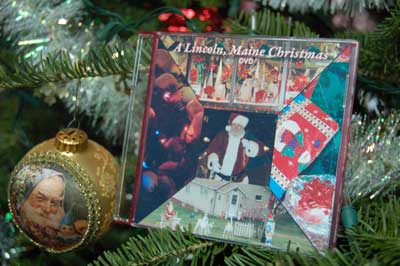
The disc is a welcome addition to our photographic DVD collections offered exclusively in our web store on www.lincolnmaine.us. "This is a disc we're sure many will treasure having in your personal Lincoln archives" said Connie Rand, adding that they offer several DVDs on their Lincoln web site. The best selling one so far is "A Lincoln Maine Christmas" first released three years ago. The DVD also features calming instrumental background music to enhance the viewing experience. This disc is produced in 4:3 full screen and is compatible with all DVD players and/or computer DVD drives. |
||
|
(Connie Rand) Lee and Connie Rand, dba Rand Advertising LLC, created and maintain the Lincoln area promotional website at www.lincolnmaine.us. Their web store featuring products related to the area is but one of many sections of the web site devoted to promoting Lincoln, and the surrounding areas, to the world! For more information, e-mail us at [email protected] or check out the web site!! |
||
|
|
||
|
||
|
October 17- Press Release Rand Advertising Receives 2008 Best of Lincoln Award WASHINGTON D.C., October 17, 2008 -- Rand Advertising LLC has been selected for the 2008 Best of Lincoln Award in the Advertising Agencies category by the U.S. Local Business Association (USLBA). The USLBA "Best of Local Business" Award Program recognizes outstanding local businesses throughout the country. Each year, the USLBA identifies companies that they believe have achieved exceptional marketing success in their local community and business category. These are local companies that enhance the positive image of small business through service to their customers and community. Various sources of information were gathered and analyzed to choose the winners in each category. The 2008 USLBA Award Program focused on quality, not quantity. Winners are determined based on the information gathered both internally by the USLBA and data provided by third parties. About U.S. Local Business Association (USLBA) The USLBA was established to recognize the best of local businesses in their community. Our organization works exclusively with local business owners, trade groups, professional associations, chambers of commerce and other business advertising and marketing groups. Our mission is to be an advocate for small and medium size businesses and business entrepreneurs across America. CONTACT: Rand Advertising LLC was formed by Lee and Connie Rand in 1988, and in 2007 received the local Lincoln Chamber of Commerce "Business Persons of The Year" Award for their work promoting the Lincoln area through the web site www.lincolnmaine.us. Commenting on the award, Lee Rand said, "I'm not familiar with this organization, but if they want to recognize our work and give us an award - we'll take it!". Their web site is www.randadvertising.com. |
||
|
|
||
| 1ST MAINE HOME CHURCH CONFERENCE DRAWS FROM WIDE AREA MANY ATTEND TO HEAR ABOUT NEW TESTAMENT PRACTICES |
||
|
They came from as far away as Albany, New York, to hear about and discuss the growing movement of Christians who are returning to the practices and teachings of the "New Testament" church. The fastest growing Christian movement in the world today is spreading like wildfire as "home churches" are springing up all over the globe. You just have to look at Africa and China to see what we're talking about. In China 30,000 people become Christians EVERY day and they meet in home churches following the Apostolic examples and practices of the early church.
The teacher for the conference, which was attended by 20 adults plus children, was Steve Atkerson. Steve, who heads the New Testament Reformation Foundation, lives in Georgia with his wife, Sandra, and their three home-schooled children. Steve graduated from Georgia Tech and worked in industrial electronics before heading off to seminary. After receiving a Master of Divinity degree from Mid-America Baptist Theological Seminary in Memphis, served on the pastoral staff of a Southern Baptist Church. After seven years in the traditional pastorate, he resigned to begin working with churches that desire to follow apostolic traditions in their church practice. Since 1990 he travels and teaches as the Lord opens doors of opportunity. Steve is an elder at a local house church, is president of NTRF, edited Toward A House Church Theology, authored both The Practice of the Early Church: A Theological Workbook and The Equipping Manual, and is editor of and a contributing author to Ekklesia: To The Roots of Biblical House Church Life. |
||
|
Arrangements for the one-day conference were made by local businessman Lee Rand. Last year, Rand was also instrumental in bringing to the Lincoln area world-renowned author and lecturer on Israel and "end times" topics, Avi Lipkin. And several years ago, he organized an appearance by Barry Wagner from Ezra International. Organizing such events is part of what Lee sees as his "ministry" and although no other projects are in the works at the moment, he's sure there'll be others.
Atkerson will be holding a two-day conference next weekend in Putnam, CT. Anyone interested in his ministry can access his web site at http://www.ntrf.org. The teachings were held in the Conference Building of the Lincoln Maine Federal Credit Union on West Broadway in Lincoln. The conference started at 8:30 am and closed at about 5:30 pm. The four main topics of discussion were: 1-The impact that the practice of the early church should have on churches today, 2-The benefits of celebrating the Lord's Supper as a true Holy Meal every week, 3- The evidence for and mechanics of participatory meetings, and 4- Elder-led congregational consensus as the Lord's ideal for church government. |
||
|
- Photos by Connie Rand
|
||
|
|
||
|
|
||
|
Lee Rand Photo
|
||
|
|
||
|
Visit Our Lincoln Web Store! Our outstanding DVD of the sights and scenes of Christmas in Lincoln sold very well during this past holiday season! So well, in fact, that we've discontinued it!! And, produced a better one!! "A Lincoln Maine Christmas" is now available!! It's really a completely different DVD than the original. Twice as long and with Dolby Digital stereo background music, it also features HD quality photographs. You'll love it!! It's pictured here- notice the colorful cover! We also have a DVD slideshow featuring over 400 of our Photos of the Day. And we've added Tree Squeak items, Connie's quilts, bumper stickers and photo booklets, with more items to come. For complete product details and ordering information, click here. |
||
|
To advertise on this site, call us at 794-8071 or send us an e-mail!
We would like to welcome Northern Pines Care Estates, our sponsor for this page! Their residential care facilities are Lakeview Terrace in Lincoln and Care Ridge Estates in Lee. |
||